
 Tá Roy Keane tagtha ina imreoir Glasgow Celtic faoi deireadh. Taispeánadh é don lucht scriobha agus craoltóra inniu, agus d'inis Roy Keane dóibh nár tháinig sé go Parkhead chun críoch bog a chur ar a saothar sacair, ach chun craobhanna a bhuaigh ar son an fhoireann.
Tá sé sin ceart go leor - is fear sárbhródúil é Roy Keane agus is cinnte go raibh a chuireadh amach ó Manchester United ag cur isteach go mór air agus é amach ar boithre iargulta Cheshire ag siúl lena ghadhar. Ach an cheart é, í ndairire, Roy Keane dul suas go Glasgow agus imirt ins an SPL? 'Sé amach ins an Spáinn atá an ghlóir agus an onóir. Ag imirt í leine bán Réal Madrid, b'fhéidir don laoch mór Éireannach seo a tháispeaint don domhan mór - agus go Ridire Albanach éigin fréisin - gurbh é Roy Keane ceann dena peileadóirí sacair is fearr sa domhan fós, cibe blianta d'aois atá sé. Ach níor imigh, agus mar sin beidh Roy Keane ag imirt in Albain, fatach ag imirt i measc abhaic.
Is deireadh brónach é do Kheane, cé nach bhfuil dul amú aige tar eis an clampar a d'éirigh suas idir eisean agus Sir Alex Ferguson. Ach dar leis an Spailpín Fánach, murab fhonn do Kheane dul suas go Glasgow, bhí gaisce amháin fagtha aige le déanamh, rud a mbeadh an rud is crógachtaí a rinne sé riamh. Agus is é sin ná dul suas go Glasgow ach dul ina Ranger, in ionad a Cheltic.
Is docha go bhfuil roinnt smigeanna tar éis an talamh a bhuaileadh tar éis léamh an abhair sin. Ach seo iad mo fháthanna mar ba mhaith liom an gorm a fheiceal ar dhroim leathan Roy Keane.
Gach aon lá agus an Spailpín ag siúl sráideanna Bhaile Átha Cliath, feicim roinnt ápatha agus geansaíthe Glasgow Celtic ar a ndroimeanna. Cén fáth Glasgow Celtic? Ón thírghrá, ar ndóigh. Dár leo, is é Glasgow Celtic an fhoireann sacair is Gaelaí ar an ndomhan, agus ba cheart gach aon Ghael a thacaíocht a thabhairt leo, nó dul amach ón gcófra mar dhúchrónach agus spiaire Shasana.
Bhuel, ní club Éireannach é Glasgow Celtic; mar is léir ona ainm, GLASGOW Celtic, is club Albanach é, a imríonn faoi Bhrat an Ríocht Aontaithe cosuil le gach club Albanach eile. Bhunaigh sagairt Éireannach an club ar dtús, cinnte, ach sin seanscéal anois. Má tá an meid mheais ag an dream tacaíochta Celtic ar an gCaitliceachas, b'fhéidir gurb fhearr dóibh dul chuig an Aifreann Dé Domhnaigh, in ionad dul isteach i dtithe tairbhne ag feachaint ar Sky Sports.
Cé nach dtaitníonn sé go mór liom, is feidir liom a thuiscint cén fáth go gcreideann daoine ins an mbolscaireacht agus ins an bhfógraíocht seo. Sin é an saigheas bolscaireachta chéanna atá ag cur geansaíthe foirne Shasana ar dhroim gach dara mhac Éireannach, ar ndóigh. Ach an rud a choireann mo bholgsa maidir le Glasgow Celtic agus Glasgow Rangers ná an clampar seicteach uafásach amadánach a éiríonn idir lucht Celtic agus Rangers. Támid anseo in Éirinn i bponc leis an fuath olc seicteach seo, ach chun an seanargoint a chur ar siúl i dtír eile, agus a choimead ar siúl níos faide ná céad bhlian? Ba cheart náire a bheith ar gach mac mhathar go léir acu.
Geallann stiúrthóirí Glasgow Rangers agus Glasgow Celtic go gcuirfear coisc ar an seicteachas atá ar a lucht tacaíochta agus deantar rudaí beaga ó uair go h-uair, ach tá fios maith ag gach céann acu gurbh í an seicteachas atá faoi bhun a staideas mar clubanna móra sacair. Dá dtiocfadh Roy Keane, laoch mór na hÉireann, amach ins an léine gorm ag Parkhead, feictear nach raibh ins an seanargoint ná seafóid, agus is féidir leo é a chur taobh thiar de. Ach nuair a thógtar an fuath agus an fhéiniúlacht seicteach ó Rangers nó Celtic, cad atá fagtha agat? Partick Thistle, sílim, agus ní cheannaítear roinnte geansaíthe Partick Thistle.
Is trua nár rinne Roy Keane an gaisce deireanach sin, ach táim go résúnta cinnte ná nach bhfuil na fir móra Rangers ná Celtic ag siúl le deireadh a ngnó tairbheach faoi laithir. Go n-éirí le Roy Keane agus a chlub nua, cibe club é, an t-imeoir sacair na Poblachta na hÉireann is fearr riamh, seachas amháin Liam Ó Brádaigh. Cén fáth an Brádach? Sin scéal eile, mar a dhearfá...
[Gaeilge], [sport], [soccer]
Thursday, December 15, 2005
Glasgow Celtic: An Rogha Ceart do Roy Keane?
Monday, December 12, 2005
Public Service Broadcasting

The BBC is a public service broadcaster. What this means is that as well as broadcasting shows that the majority of the public want hear, such as Jonathan Woss on Wadio Two, or whatever awful chatshow the Corporation have signed Davinia McCall to present on TV, the BBC also broadcasts shows that most people do not want to hear, that are of interest only to a minority. The reason for this is because worth and value are not democratic notions, because there are some things that should be broadcast and disseminated because they are valuable in and of themselves.
The Bach season on BBC Radio 3 is the latest example of this. In what is a magnificent, epic gesture towards one of the towering giants of Western music, of Western intellectual and artistic achievement, BBC Radio 3 is going to spend ten days continuously broadcasting the complete surviving works of JS Bach. Nobody is going to listen to ten days' of Bach, but that's not the point. The BBC is making a statement of values, that the BBC considers Bach valuable and worth cherishing and celebrating. And we should all rise in a shouted hurrah! at the very notion of it.
While the BBC is the best and most famous public service broadcaster in the world, that does not mean that other public service broadcasters should not try to emulate the BBC standard, even though they cannot match the BBC for resources. Consider YLE Radio, the State Broadcaster in Finland. YLE cannot even attempt to match the BBC in terms of reach, resources or history, but that doesn't mean it doesn't try. In a marvellous statement of who they are and what they believe in, YLE broadcasts a weekly bulletin of world news in Classical Latin. There are very, very few people that listen to this broadcast, but that's not the point. The point is that Latin runs through the weave and woof of our Western Civilisation, and YLE is reminding people, as part of YLE's public service remit, that this is important in reminding us of who we are and where we come from.
RTÉ is a public service broadcaster, supported by a tv license of €155 per set per annum. RTÉ's idea of public service broadcasting for Christmas appears to be a repeat of Showbands, starring Kerry "Chipshop" Katona, the pride of Warrington. "Why do we bother, Fawlty? I didn't know we did, Major," indeed.
Friday, December 09, 2005
King Kong is Getting Monster Reviews
 Pardon the pun above, but this is looking a lot like war. Tim Robey in the Daily Telegraph, normally one of my favourite movie critics, goes absolutely nuts about Peter Jackson's remake of King Kong in this morning's Telegraph. You correspondent wasn't expecting this, as I always thought the original Kong was of its time - fantastic, amazing, for 1933, but a bit so-whatty in 2005. But by damn it seems I was wrong - Peter Jackson's movie is, according to Robey, "magnificent in its own right - [it] could be the most loving remake in film history, an elaborate act of homage whose generosity of spirit and sheer sincere rightness, qualify it instantly as one of the great movies about a movie."
And then he starts to say he likes it. Slightly stunned, I visited Rotten Tomatoes, and it seems the Yankees are swooning too, with Todd McCarthy of Variety telling us that "What's up on screen is rarely short of staggering." So there might be something to do this Christmas other than get hammered and fight with your relations after all. Who would have thunk it?
Thursday, December 08, 2005
The Wretched State of Irish Politics and Irish Political Journalism
Ivor Callely has bitten the dust at last, and the vultures are circling the corpse. The Evening Herald, squalid rag that it is, reports on its front page this afternoon that Callely "begged" Bertie Ahern not to give him the heave-ho. Marie O'Halloran criticises his courage from the safety of the high-minded pages of the Irish Times. And that Old Lady herself editorialises that Ahern had no choice but to put a bullet behind Ivor's ear.
An Spailpín Fánach has a question: If Ivor Callely's head is worth IR£1,500, the value of the freebie he got from this painting contractor, how come no-one is calling for the head of the senior minister at the Department of Transport, Mr Martin Cullen, TD, who famously blew €52 million on voting machines that don't work? What about Jim McDaid, speeding the wrong way down the Naas dual carriageway in a drunken haze? Frank Dunlop is at the Mahon Tribunal names names, times, dates, places and amounts of bribes delivered so the Liffey Valley Shopping Centre could be built, and it's not even getting so much as a stifled yawn from the chattering classes? What in God's name is going on here?
Saturday, December 03, 2005
The Moral Civil Servant
 Once upon a time, An Spailpín Fánach had enough of his then day job. In to the boss with him to hand in his notice.
"Behave yourself, you Spailpín Fánach," said the boss, wittily. "We'd hate to lose a man of your calibre. Tell you what, not only will we give you a few pound extra in the dear old per diem, we'll sort you for the company motor as well. How about that?"
"I've never been so insulted in my life!," replied your hero. "A car? Oh, how could you! How could you? I've never been so insulted in my life! Oh boo hoo! Oh boo hoo hoo!" I then collapsed on the carpet, weeping. As you do when you're offered a raise and a bonus.
Front page news on yesterday's Irish Independent today's Irish Times is Junior Minister for Transport, Ivor Callely, whose attempt to bonus an aide to get the aide to stay has blown up in his face. So Minister Callely is now a national laughing stock (when Joan Burton is cracking good ones about you on Rodney Rice's radio show you know things are very, very bad indeed) and poor Ivor was even the lead story on last night's Nine O'Clock News.
Is it just me, or does something stink about this whole business?
Ivor Callely offering or not offering a car to someone who works for him is not news. People get cars through work all the time. Civil servants quitting is not news; civil servants quit all the time, and it doesn't make the news because it's so hard to tell that they were actually working in the first place.
What is bizarre about the Callely quittings is the high moral tone of the departing civil servant/advisor. Corrrect me if I'm wrong, but you have to beat many a bush in Ireland to find this level of probity. Ireland operates on the nod and the wink, the you know yourself basis. Any law in this country is never seen as a constraint, but as a suggestion. The speed limit is 100km per hour but sure how would anyone get anywhere then? I'll shoe it to Hell - sure aren't the guards doing the same thing? Planning permission? Sure once it's up they'll hardly come and knock it, will they? It'll be fine. Don't mind that oul' plannning permission.
And then, out of the wilderness like an Old Testament prophet, come these two civil servants who are callling on the children of Israel - or in this case, Ivor Callely alone - to repent, repent, the day of the Lord is at hand? Minister Callely must be feeling very unlucky indeed that the two civil servants with the a higher level of moral probity than St Simeon Stylites should both pitch up on his watch at the Department of Transport? How odd that they were not in the Department of Health when that big booze-up was organised for Sligo? The preaux chavaliers would hardly have stood for that.
There is no way a political advisor having his feathers ruffled by the offer of a car is front page news. The only thing we should note about this story is that Minister Callely could be as well shot of him, because any man who operates at such a level of innocence will not last jig time in political life. So why is this business dominating the news agenda?
Why don't the media concentrate on what's happening to two of their own for trying to print stories about Irish Ferries? Gerry Flynn, Industrial Correspondent of the Irish Independent, has been taken off the story for writing that Irish Ferries management were thinking about using tear gas in another industrial dispute, and Justine McCarthy, one of the best journalists in the country, has had a story spiked and her column suspended for not toe-ing a party line. Maybe that's a story there?
Or how about what's actually news in political life in this country, where Tom Gilmartin and Frank Dunlop are dueting like matched canaries at the Mahon Tribunal, explaining who was bunged and for how much so that the Liffey Valley shopping centre should be built? Why isn't that being shouted from the rooftops, instead of buried in the graveyards of the inside pages?
Instead of wondering who in the corridors of power are on the take what we, as a nation, perfer doing is getting up early to watch George Best's funeral, and then out to that very same Liffey Valley shopping centre to queue for an hour or two and then buy a hatstand in B&Q. "Nam qui dabat olimimperium, fasces, legiones, omnia, nunc secontinet atque duas tantum res anxius optat, panem et circenses." Like Juvenal's contemptuous remarks about the Romans in the first century AD, the Irish nation is happy with bread and circuses, and place absolute and uncritical trust in our betters. Go bhfoire Dia orainn, agus ár dtír bheag bhocht.
Friday, December 02, 2005
Subtitled Fillums
 'Ave you 'eard that extremely annoyingg ad on ze rrradio, where zere iz zome mademoiselle with an accent thicker zan ze cheeze ze size of a tractor wheel encouraging uz to go to some foreign movie fest-ti-val? Mes amis, is it simply the fevered imagination of An Spailpín Fánach, or is that ad just as crass as having someone in blackface singing "My Old Kentucky Home?" It's not like we think it's Sophie Marceau, and don't know that it's actually some boiler whose day job involves raising the standard on Fair City by acting according to The Method. Specifically, the Ronseal Method, I believe.
Listening to the copy is instructive, though. As advertising copy it is poor, of course, as your faithful chronicler of modern Irish life didn't realise until I came to write this that I have no idea what this festival is for or when it's on. A quick google tells me that the only film festival that's on right now is a German one (meaning we should have some Brunhilde character replace Sophie, shouting "raus! raus! Ze offens are zataway!" I suppose), so that can't be it. The Jameson Film Festival isn't on until February, so it does seem terribly early to be advertising that.
What is interesting however, as we listen to Nat'lie from Fair City trying to sound like Marie Antoniette, is the revalatory insight it gives into the people that run these festivals, and whom they expect to turn up. If we can judge by the this ad, they're not actually looking for anyone who ìs particularly interested in movies. They're just looking for snobs. Someone who wants to go along to a French Film Festival because he, she, or it thinks it'll sound good in Rody Boland's or, God help us, Kehoe's of South Anne Street, later. They'll tell you that the French are so different to Americans, not so bombastic, so much more, I don't know, full of joie de vivre, perhaps? Oh, right, you'll say. So what was this picture about? Oo-er, they say. Haven't a bog.
If they knew their stuff, which of course they don't, they'd realise the French New Wave Cinema of the 'Sixties, the Goddard and Traufaut stuff, was France's tribute to Hollywood, which, like jazz, is a American Art first and foremost. Having a pop at US film, as they do in this film festival ad, is like that vogue in literary criticism that dismissed the Western Canon as simply the work of Dead White Males. If it wasn't for those DWMs, there wouldn't be any literature to criticise, and these goofs would have to get real jobs, instead of wearing black polo neck ganseys and bothering the first years in the Universities of Ireland.
Not that there's anything wrong with a movie just because it's French. I'm just getting a bit annoyed with the notion that everything is right with a movie just beacuse it's not American. The 1990 Cyrano de Bergerac that starred Gerard Depardieau is one of An Spailpín Fánach's favourite movies ("I saw him look at her with his eyes; it was like seeing a slug slither along a rose." Now that's a man that's torching. Quality.) but that's not because it's French. It's because, like any great movie, it takes me to places I've never been and makes me think and feel things I've never thought or all felt. Not because I thought I'd be able to swish around the wine bars of Dublin being gallic and insouciant.
The last movie An Spailpín Fánach went to see in an Art-House Cinema was Sideways, the movie that was billed as a comedy but played very much like a goddamned tragedy to your narrator's terrified eye. I saw it in one of Dublin's leading art-house cinemas, and the biggest laugh of the night, from a two-hour movie, was when George Bush was seen in the background on a TV screen. If you're mixing in a certain society, any reference to George Bush will always get you a cheap laugh. But what's behind the laugh is the notion that we are not some thick like George; we are urbane, cosmopolitan, witty, charming. We wash down our boxty with the finest of fine champagnes. We have a lot to learn.
Thursday, December 01, 2005
ASBOs, Social Order, and What Ireland Can Learn from the Ancient World
 Like anyone else that saw it, An Spailpín Fánach watched the Prime Time show on Monday featuring the feral behaviour of young people beyond the law in housing estates all over Ireland with no small amount of revulsion, revulsion that very quickly turned to anger. Ordinary, decent people are having their lives ruined, blighted and put in very real danger by these hoodlums, while Irish society just wrings its hands and says "oh dear, oh dear, these children have problems, oh dear, oh dear." As remarked in this forum only yesterday, An Spailpín Fánach is only too aware of the dearth of positive role models for these young people, but, with the greatest respect in the world, that's no damned good to the aged, the infirm, the elderly and the helpless who are spending the autumn of their years in terrorised house arrest in their own homes.
It's not good enough. It really isn't. And, in the absence of positive role models, how about a negative role model to be getting along with? Something to remind these young people that, while they may be feeling disenfranchised and isolated from society now, society reserves the right to make them feel a damned sight worse if they continue to act the maggot?
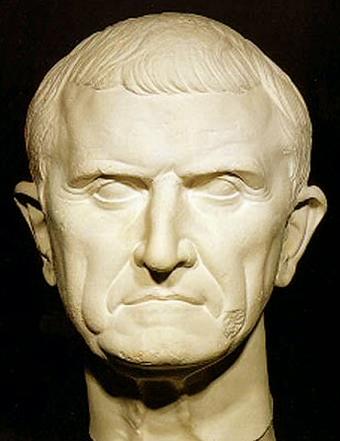
As a proto-classicist, An Spailpín is reminded of the problem faced by Marcus Lincinius Crassus, who was praetor of Rome when Spartacus led a slave revolt in the first century BC. Crassus took on Spartacus' army and defeated it at Capua in 71 BC, but he still needed to make an example, to make it middling clear to all concerned that the Senate and People of Rome would not be standing for any nonsense.
Marcus Crassus had an idea. There were six thousand prisoners taken after the defeat of Spartacus at Capua, and Crassus had every one of them crucified along the 200 miles from Capua back to Rome, as an example of what happens when you start getting notions. Nothing good, in short. Allowing for crucifixions on either side of the road - a very practical people, you know, Romans - that works out at a cross every sixty or so yards on both sides of the road for two hundred miles. Crassus got his point across, and the Empire lasted for another thousand years.
An Spailpín Fánach is not advocating for an instant that we have crucifixions in Ireland at every sixty yards of road. Traffic is enough of a nightmare as it is without the added distraction of Emma Caulfield of AA Roadwatch telling commuters to use alternative routes and plan extra time for their journeys rather than use Merrion Square this evening at rush hour, as the Corpo are nailing up a few boy racers and delays are expected. No; that would be doing the dog on it.
All you need are a couple of high visibility crucifixions, to get the point across. 100,000 men joined Spartacus two millennia ago - we're talking about buckeens here that wouldn't be able to count that high, some of them. A mere handful of crucifixions will get the point across in jig time.
The standard crew to carry out a crucifixion in the Army of Rome was five, which worked out at one centurion and four ordinary soldiers. In 21st Century Ireland, this works out at one ganger, from Meed or some awful place in the midlands, where they don't breed 'em squeamish, and a few Eastern Europeans, who are glad of the work. They make their way out to whatever community is on the list for that evening - and I won't name names, but we all know where they are, don't we? - and the keep their ears peeled. Somewhere there'll be some wiseguy with his acolytes around him giving it socks about how he did six munts in da 'Joy, no worries, them cops are only bleedin' mulchies, I'm well tough, I am. He'll do just fine. Over go Ivan, Josef, Pavel, Nikita and Mick, they scare off the wiseguy's mates, and take the wiseguy himself. I'm not sure how many of these acolytes will go Musketeering with the one-for-all, all-for-one stuff when their dread commander is taken, but something tells me not many. So the crucifixion party take the wiseguy, his mates run away like the gutless wonders they are, pretty good at burning out old people's cars, not so tough at taking on crucifixion parties, and whack, whack, whack, up with the wiseguy the cross, and leave him there. Our hero, who found incarceration in Mountjoy Prison no sweat, won't have half as much jawing when he's a Carrion Crazy Meal for Pakie Preachán and the rest of the boys.
A lot of people will be horrified when they read this. Surely, they will say, this is simply too much. Rome's was a cruel and vicious Empire, which placed no value on human life or dignity. We've moved on from that - that was two thousand years ago, we've moved on.
Well yes, I am willing concede that point. One Roman practice your correspondent would not advocate, for instance, was the old superstition of human sacrifice, of burying people alive to appease the gods. An Spailpín Fánach would never advocate such a measure - in the time it'd take the Corpo to dig the damned hole the sacrifices would have died of old age, and An Spailpín will not stand over such a cruel end. But as for going for the lámh láidir with anti-social behaviour, I really don't see why not. It's going to come to that anyway, as the generations breed out a population that's more and more distanced from any sort of authority. And the longer it takes society to make a stand, the bloodier that stand will be. Make up your minds.


