
There's a fascinating article in USA Today about lethal injection gaining over shooting as the prefered method of capital punishment in China. A company called Jinguan, aflame with that spirit of entrepreneurship that currently rages through China, has therefore invented a "Death Van," to make it much easier to dispatch the wrongdoers.
It turns out that prior to this, if you wanted a hood killed by lethal injection, you had to send him all the way to Beijing, whereas if you would settle for just shooting him all you needed apparently was a gat, a back garden and a prisoner willing to keep his mouth open while being shot in the back of the head - they don't care for the bullet wrecking the face, you see. Spoils the effect. Now, because China supports human rights, you can just send for the Death Van, and they'll take your hood(s) on board and do the neccessary.
Nasty cynics in Amnesty International aren't convinced, though. It seems that organs taken from criminals who have died by lethal injection are in better shape, and therefore more saleable in a China currently aflame with entrepreneurship, that some guy that got riddled.
The Chinese Governement has sixty-eight crimes on the statue that are punishable by death. They are maintaining the numbers who are executed every year as a state secret, but Amnesty reckon it could be as high as eight thousand a year, which works out at a little under one an hour, all day, every day. That's a lot of second-hand liver to hit the streets in a free market.
Technorati Tags: World, China, capital punishment, death vans
Thursday, June 15, 2006
The Chinese Death Van
Wednesday, June 14, 2006
Charlie Haughey: The View from Outside the Island
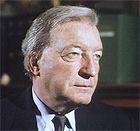 Now that Charles Haughey has crossed over the River Jordan, we as a nation seem no wiser in trying to figure out what to make of him. Perhaps it's best, then, to let an outsider cast a cold eye, on life, on death. Steven Pearlstein's assessment of Haughey in this morning's Washington Post is headlined "Ireland's Economic Transformation began with Charlie Haughey." In the article, Pearlstein goes through what Haughey did in 1987 and what its repercussions were, and cuts through all the cant and bile with a final, pithy summing up of Haughey's legacy in real - dollars and cents, darling - terms: "... Charlie Haughey, a rogue of a politician who taught Ireland the age-old truth that it is better to focus your energies on growing the pie than fighting too long or too hard over how to divide it."
Ar dheis Dé go raibh anam uasal Cathail Uí hEochadh, laoch mór na hÉireann. Ní bheidh a leithid arís ann.
Technorati Tags: Ireland, culture, politics, Charles Haughey
Tuesday, June 13, 2006
Time to Shut the Back Door
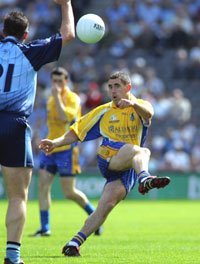 Seán Moran remarks in this morning’s Irish Times that attendances at the weekend GAA games were not as wretched it as it would appear – Mr Moran has looked at the figures and, as it turns out, the figures have been wretched for some time. And this is still the Championship proper, you know – wait until the un-appetising qualifier fare of Waterford v Longford, or Antrim v Clare, rolls around, and you’ll know what the deserted village looks like without ever once having to consult your collected volumes of Goldsmith.
If the Irish Times’ GAA reportage of the past number of years is to be believed, attending GAA games is a deeply spiritual experience, that is not only rewarding in itself but a Holy Day of Obligation, which brings Dire Punishments on those who make mock of The Faith – witness Tom Humphries’ excoriation of the Mayo supporters who left the All-Ireland Massacre of 2004 early. That unknown but immensely gifted priest who put an eighty-year curse on the Clare hurlers because of their supporters leaving Mass early was only in the ha’penny place with Big Tom in late September ’04.
And as for those who thought that gifting Croke Park, the jewel in the GAA crown, to competing codes was like turkeys voting for Christmas – they were damned to the Hills as troglodytes, bog-hoppers and “backwoodsmen.” Backwoodsmen was an interesting assignation, actually – there are very few remaining woods in Ireland since Cromwell’s visit in the 17th Century, revealing that those who gloried in the use of the pejorative simply read it in a book, instead of thinking up their own material. But never mind – the simple GAA man or woman was assured that for as long as the shamrock would bloom in Erin the masses would pay €25 a scalp and more to games that didn’t matter a damn to either the players who played in them or the three boys and a man who watched them.
Let’s say, for argument’s sake, that cruel fate has condemned you to Cork. You are sitting by the Banks of the Lee, ating crubeens washed down with Murphy’s stout, and fashionably dressed in a Roy Keane t-shirt. You are considering driving to Limerick for tomorrow’s game. But you have over one-hundred All-Ireland titles in the bag already – after that, it takes something to be on the line to get you out of the cot in the morning.
What was on the line for Cork yesterday? Nothing, and nothing will be on the line for some time. A visit to the qualifiers is no real big swing to a county thinking in terms of All-Irelands. They know the real thing doesn’t begin until the August Bank Holiday weekend, and everything before that is just so much throwing of shapes. Pass the crubeens.
What, then, was on the line for Limerick? This is where it gets interesting, because the evidence shows that the real legacy of this Back Door System is to comfort the strong and afflict the weak. If you’re a Limerick football supporter, what was on the line for you on Sunday? If you lost, you know the past few years have been for nothing. But if you won, what progress have you made? How nearer to glory are you? You’re in a Munster Final, but you’ve been in Munster finals before, and don’t remember getting all shivery on the strength of that alone. Will Kerry fear you because you dispatched Cork? Well, no, they won’t – Kerry, like Cork, are thinking Sam, and they know that this is just shadowboxing as well.
This is issue of the devaluation of the Provincial Finals. It’s not that winning a title means less, although it clearly does; it’s that losing a title means less, and simply gives the strong teams more room to manoeuvre.
People who condemned the old knock-out system as “unfair” forget that unfair cuts both ways. While it might be “unfair” that your non-traditional power gets hammered like a nail nineteen years out of twenty, that one twentieth year when the non-traditional power strikes back and leaves the traditional power dead in a ditch is equally unfair. It’s unfair on the traditional power, who would certainly reverse the result in a replay, and it’s unfair on the rest of Ireland that some middling team is that much nearer an All-Ireland than the rest of the country because they had a lucky day at the office.
If a system is “unfair” to both sides, doesn’t that mean, by definition, that it must therefore be fair to both sides, and thus universally fair? An interesting syllogism, don’t you think?
If abstract reasoning isn’t your bag, consider the very concrete case of Roscommon, who host Galway this weekend in Hyde Park. Roscommon have been considered a top-table football power since Jimmy Murray’s day. The past five years suggest that Roscommon are now second division, and that slide is likely to continue unless something happens very soon. How did that happen?
The popular perception is that it all stems from rank indiscipline in the Roscommon ranks, nudie pool, porter babies and all the rest of it. Now, when their was a story in the Sunday Times the week before last about Vinnie Murphy of Dublin exposing himself to Star Trek actor Colm Meaney and quipping “Beam Me Up Scotty,” there were no photo sensation stories in the Sunday People. And young men having a taste for porter is hardly news in Ireland – it seems unlikely that a Roscommon man’s preference for the Devil’s Buttermilk should be any stronger than a civilian’s. So maybe the explanation of Roscommon’s decline being due to Mr Booze is a superficial and incorrect one, and perhaps greater detective work is required.
It’s interesting, when one talks to the Rosserini, that the chief gripe the Roscommon supporter has with his or her football team over the past number of years is a distinct lack of pride in the jersey, something that was never, ever, associated with the primrose and blue before. This is not a result of porter – the jersey smelling of last night’s booze and fags is a result of porter. What can make a man lose respect for his county jersey, which he has loved since he was a child?
Could it be the perception that the jersey doesn’t mean what it used to? An Spailpín Fánach has been wondering over the past number of months if what happened to Roscommon in the 2001 Championship had the same effect on the Roscommon football psyche as a meteorite crashing into Strokestown – was that loss an extinction-level-event for the Roscommon football psyche?
Consider the facts of that Championship. Roscommon went to Tuam as massive underdogs against a Galway team that were unlucky to lose the previous year’s All-Ireland after a replay. But Roscommon won the day, because Séamus O’Neill played the game of his life, and because Paul Noone marked Michael Donnellan so closely that an ecstatic Shannonside radio commentator Willie Hegarty was moved to remark “If Michael Donnellan went down the town for a bag of chips, Paul Noone would be in the door ahead of him.” After winning the subsequent Connacht Final, Roscommon’s first Connacht title in ten years, Roscommon marched on to face ... Galway.
Galway? But surely Galway were already slain? Up to a point Lord Copper; Galway were cast from the light, but, like the most beloved of the angels, Galway rose from the lake of fire to contend for greatness again. They arrived in Castlebar to put down the insurrection, and put it down just as thoroughly as Major General Havelock put down the Indian Mutiny. And Roscommon haven’t been seen or heard of since. They fluttered briefly in the qualifiers in 2003, until they were coursed out of Croke Park by Tommy Lyons’ Dublin I believe, or possibly Kerry. But other than that, they’ve been dead in the water.
The GAA, surveying the wreckage in Castlebar after that Galway-Roscommon game of 2001, decreed that the slaughter of the innocents was a bit much, and put an addendum into the back door system, forbidding rematches unless they became inevitable, but the damage was done. It is now clear that a traditional power has two lives in the Championship, whereas a weaker county has just the one. The most thing that a weak county had on its side, the element of surprise, is now denied it, while the traditional powers continue to scheme for September as they always did, except they are now aware that they have a greater margin of error until the hay is saved and August has rolled around.
The spectators aren’t getting a great deal either. A philosopher and Roscommon man remarked to An Spailpín at the time of the introduction of the new system that the people of Ireland were now denied what he coined as “the five to five feeling”; meaning, in the old days when all the games started at half-three, by the time five to five rolled around you know whom was slaughtered and whom had survived; whether the traditional power still stood mighty, or whether it had been slain by an underdog team that suddenly had the gates of glory yawning open before them, if they would only take their blessed opportunity.
No more. Now when five to five rolls around, the crowd mooches out of the ground just like they mooched in, fully aware that the real thing doesn’t begin until the August Bank Holiday weekend and this has been like a league game, only with better weather. And when the August Bank Holiday weekend rolls around and Croke Park is sold out, Marian and the Irish Times and the rest of them will tell us all is well with the GAA and isn’t it great those frightful backwoodsmen have been beaten back to their shacks, but by then another county will have atrophied, and another light will have gone out where the GAA used to be.
It’s time to shut that back door while there’s still a horse left to bolt. No knock-out system is going to be foolproof; if the GAA wanted a foolproof system to decide who would be All-Ireland Champion they should hire a consultant from KPMG to write a report, but it’s hard to imagine a full house at Croker turning up to hear him read it. What the knock-out system provides is hope and glory, but this is a glory that has been diluted by the advent of the back-door system and a hope that has been all but extinguished. The back door must be closed before the candle finally gutters to its end.
Technorati Tags: Ireland, culture, sport, GAA
Monday, June 12, 2006
The Biffo Barbershop Incident
 Over two thousand years ago, Aristotle figured out that the big thing in analysing any issue was to reduce everything to its essential features. Don’t be distracted by details that aren’t important; you have to get to the root of the thing.
This is a penny that has yet to drop in the Irish media. Such coverage as An Spailpín Fánach has seen of the Biffo Barbergate Incident all seems to focus on the question of how long a young man’s hair should be. Brody Sweeney, that seller of expensive sandwiches, was telling Marian Finucane on Sunday that in his young day the thing was to grow your hair long, like Jesus, presumably. There’s a hairdresser quoted in yesterday's Sunday Tribune remarking that a number one blade is no big deal, really. An Spailpín couldn’t quite figure what could be closer than a number one blade; decapitation, one presumes.
But this is all dancing around the issue. The issue is not about hair or haircuts. The issue is about whether or not a school has a right to make rules in areas that are not strictly academic, and what parental attitudes to those rules should be. If you believe that yes, the school does have the right to impose a dress code on a student body, then it’s case closed, and the headmaster was well within his right to turn the three young people away. If you don’t believe that a school has the right to impose a dress code – well, maybe you ought to send your children somewhere else? The day before the Junior Cert seems a little last minute to be making these sort of decisions.
An Spailpín is unsure if the school still has the right to impose its dress code once the exams start, the school year being technically over, but he’s not that bothered, really. It looks like the thing will go to law anyway, as one of the Mummies concerned looks like there’s nothing she relishes more than the unarmed combat that is the bearpit of the Four Courts. An Spailpín is certain of only one result of this Biffo Barbershop Incident and it is this: if, many years hence, you’re visiting the town of Tullamore and you’re feeling peckish, do not laugh at the appearance of your server when you go snackbox-hunting, irrespective of how so, like, not, you may consider his apparel. For it could very well be that your server is this very young man that’s just chucked his education for the sake of a haircut, and how much greater store can a man put in his appearance than to throw his future away for the sake of it?
Technorati Tags: Ireland, culture, Tullamore, haircut
Thursday, June 08, 2006
Lá Oráiste Tagtha ar Deireadh ag Corn Domhanda an Sacair?
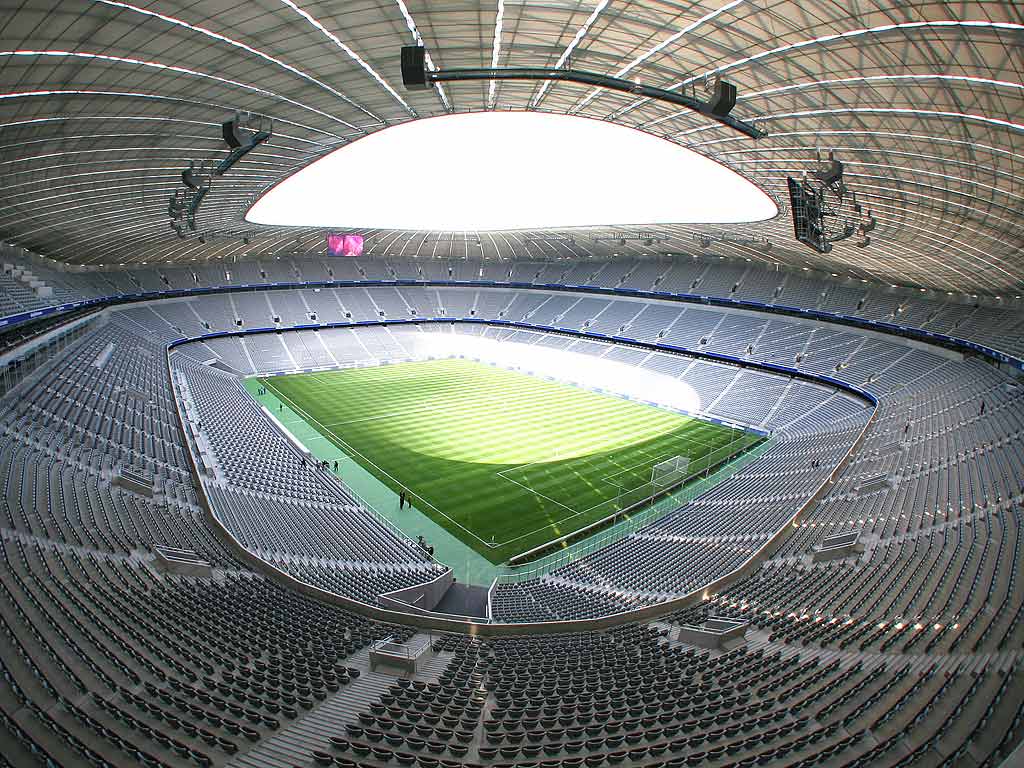
Tá Corn Domhanda Sacair chun tosú amárach i München, an Ghéarmain, agus tá bhur Spailpín Fánach ag tnúth go mhór go mbeirfidh an Ollainn ar an gCraobh ag an gCluiche Ceannais, arís i München, ar an 9ú Iúil. Níl grá mór agamsa ar na nOllainis; tá deich Euro agamsa orthu le Pádraig de Paor.
Sin mura mbeirfeadh an Bhrasaíl ar an gCraobh, ar ndoigh. Tá sé soileir le cach agus suim aige nó aici ins an sacair gurbh í an Bhrasaíl an foireann is fearr sa chomórtas, agus gurbh é Ronaldinho an imreoir is fearr sa dhomhan. Deirtear go bhfuil Ronaldinho comh maith anois ná go bhfuil sé comh maith le Pele féin, mura bhfuil sé níos fearr. Smaoineamh eiriciúil ab ea é sin cúpla bliain ó shin, ag Corn Domhanda 2002, ach tar éis a shéasúr den scoth le Barcelona, is leir go bhfuil Ronaldindo faoi bhláth a bhua anois, agus tá an ardán ceart aige, ardán an domhain, reidh anois chun an bua sin a thaispeant do lucht leanúna sacair, agus leanúna spóirt go ginearálta.
Tá praghas an Bhrasaíl beagán ró-ghearr ag an ngeallghlacadóir chun pingin an Spailpín a chuir uirthi, afách - is cuimhin liom agus le mo lucht gcarad foireann Brasaíle 1982, an foireann is fearr gan an Corn Domhanda a bhuachaint. Theip ar an foireann galanta sin, agus a h-ainmneacha fós comh dríochta anois mar a bhíodís ansin, Zico, Socrates, Josimar - i gcoinne an Iodáil sa dhara babhta an chomórtais, agus fagaim le huacht gurbh fhéidir leis an mBraisaíl titim ar an gcliath chéanna anois. Má tá easpa múinín agat ar an mBrasaíl, nó b'fhéidir go bhfuil tú ró-shantach chun praghas ghéarr a thógail, tá roinnt foirne ann ab fhéidir an Craobh a bhuchaint.
Tá múinín an Spailpín curtha ins an Ollainn mar ba bhreá liom a mbainisteoir, Marco Van Basten, nuair a imríodh sé leis an Ollainn agus AC Milan, agus tuigtear gur chuir Van Basten stop ar an gclampar idir cheile a mbainneann le gach foireann Ollainis i rith na blianta. Comh maith le seo, is beagnach comórtas baile é Corn Domhanda ins an Ghéarmain don Ollainis mar is cine Ghéarmainis iad - éist le focail a h-amhrán náisiúnta, agus tuigfidh tú go breá.
Baineann baol leis an Ghéarmain fhéin i gcónaí i gCoirn Domhanda ó bhuaigh sí a céad Chorn i 1954, ach níor rug an Ghéarmain bua ar aon thír mhór ó 2001, rud nár tharla riamh. Comh maith le sin, tuigtear go bhfuil a gcaiptéan, Michael Ballack, gortaithe don gcéad cluiche amárach, agus b'fhéidir níos faide ná sin. Mar sin - cé go gcuireann sé faitíos orm - ní chreideann an Spailpín Fánach gurbh í seo Bliain an Iolair arís.
'Siad na Sasanaigh an dara rogha na coitianta don gCorn seo, agus tá roinnt gcarad an Spailpín ag éirí beagán imníoch go mbeirfidís ar an mbua tar éis a daichead blianta ghortú. Is féidir leo, cinnte, ach síleann an Spailpín nach mbuafaidís, toisc go bhfuil siad beagán ró-lag ins na tosaigh - níor chaill Michael Owen treithe a thinnis fós, tá Rooney aonchosach, agus is cuma dá mbeach an triú chos ag Peter Crouch - is fear deas é, ach ní imreoir den scoth é. Pé scéal é, is cuma leis an Spailpín Fánach má bhuann Sasana an Corn Domhanda - mura mbuafaidh Áth Cluiche Ceannais na hÉireann, codlóidh do Spailpín go sámh agus an geimhreadh ag dridim isteach arís. Ach sín troid ar lá eile. Táim ag tnúth go mhór anois leis an gcomórtas, agus an Ollainn - agus ar an ngeall bradach a ghlac mé go n-éireoidh le Fernando Torres an chuid is mó cúil a fháíl. An bhfuil lá na Spáinne tagtha linn ar deireadh?
Technorati Tags: Gaeilge, sport, soccer, betting
Friday, June 02, 2006
Uptown Uptempo Mot

Next weekend, as well as the little matter of the World Cup, sees the fifty-ninth birthday of Randy Edelman. Randy Edelman is currently making a few pound from writing movie soundtracks, and more power to him, but in his original incarnation Randy was a singer-songwriter in the 1970s, one of those characters who played plink-plink piano and sang what were meant to come across as sophisticated songs of love and loss. His oeuvre was never really that great, to be honest, but An Spailpín will raise a glass in Randy’s honour on Saturday night week, Randy’s birthday, because Randy wrote one of the greatest of all the Songs You’re Ashamed to Love.
A Song You’re Ashamed to Love is one of those songs, probably first heard at an impressionable age, that touches you somehow, despite the fact that by all rational and reasonable judgements, it’s really the most desperate muck. Peter Sarstedt’s Where Do You Go to, My Lovely? springs to mind as a fine example of the genre, as does Terry Jacks’ Seasons in the Sun, Bonnie Tyler’s Total Eclipse of the Heart and possibly the most appalling of the whole dang bunch, their Hitler, their Napoleon, their Attila the Hun, I’ve Never Been to Me, by Charlene.
Truly terrible tunes all, and yet not without their charm. Except Terry Jacks', of course - that was always rubbish. Anyway, as Randy will be looking at the small bonfire that is a 59-candled cake the weekend after next, An Spailpín Fánach has taken the liberty of, ahem, re-imagining, updating and transposing the mise en scène of Randy’s most famous composition from 1970s New York to 21st Century Dublin. I hope that, in time and with Christian charity, the civilised world can someday forgive me.
It started out in Arnotts, the way that most things do,
You wore your Louis Vitton, I wore me Dublin blue.
I grabbed your bag and we raced out,
Hardly said a word;
You saw I was a bit o' rough,
I knew you for a fit burd.
You decided to drop charges
Because you saw I was a man;
I took you back to Finglas
And greased your bacon for my pan.
But early the next morning,
I was ruined from Dutch Gold,
You had a business meeting
As I lay there, still out cold.
When you got back in the evening,
You said you had to fly;
You're an uptown, Brown Thomas woman,
I sell Johnny Blue on the sly.
Our romance soon got heated,
As May quickly turned to June,
You got in a fight on Parnell St,
I did some dealin' in Cocoon.
But it got a little too much
When on your chips you saw a fly;
You enjoy your haute cuisine,
But I prefer Birds-eye.
You're an uptown, Brown Thomas woman,
I sell Johnny Blue on the sly.
Our romance soon was ended
When I stole your mother's ring,
I knew I shouldn'ta done it
But I could never resist da bling.
You reported me to the Old Bill
You told them that's the guy;
“I’m an uptown Brown Thomas woman,
He sells Johnny Blue on the sly.”
Technorati Tags: culture, music, Randy Edelman, Uptown Uptempo Woman, Dublin
Thursday, June 01, 2006
Where Does the Buck Stop?
Remember Ivor Callely? Ivor Callely was the Government Junior Minister who had to resign last December because he got a painter to paint his holiday home as a nixer, at a cost of a grand and a half. The Irish Times editorialised on December 8th last that “The public will not tolerate any whiff of impropriety from their politicians,” and Ivor was summarily dispatched.
Today, instead of the mild whiff of a fifteen hundred Euro nixer, we are faced with the poisonous and desperate situation of the gates of such meagre prisons as we have yawning open and the most vile and base of criminality and perversity slinking out with a song in their hearts and what An Spailpín Fánach wants to know is: whose damned head is going to roll for this?
An Spailpín Fánach has long been an admirer of Michael McDowell. McDowell is a, clever, and b, not in it for the money, with separates him from the majority of our elected representatives. But the harsh truth of the matter is that after the Supreme Court child abuse judgement Ireland has become a perverts’ paradise, a place where ghouls and monsters will come from Bangkok to holiday here, rather than the other way around, and it’s happened on McDowell’s watch. He has to go, and in a properly functioning democracy, or some strange Shangri-la where honour meant something, he would have gone already, in shame if nothing else.
It’s no time for McDowell’s many enemies to gloat either. McDowell is a man who chose to serve his country rather than get fat and rich at the bar, and for that he deserves praise. Anyone that feels like taking a cheap shot or demanding the current government to call an early election should ask themselves: who is the current spokesperson on Justice for Fine Gael? For the Labour Party? For the Greens? An Spailpín has no idea, and I suspect I’m not alone in that.
The Independent is reporting today that Irish private sector borrowing rose by 30% last year. The entire country is in hock, the prisons are discharging monsters like something out of an apocalyptic horror movie, and the so-called opposition are utterly anonymous after being gifted the biggest stick anyone could hope for with which to batter a sitting government. There was a program on TV last night where John Waters opined that there was a fear in the county at large that the bubble would burst and we’d end up back in the ‘eighties, back on the dole, back in the chain gang. An Spailpín advises the entrepreneurially inclined to start printing those Kajagoogoo t-shirts now, and get in ahead of the rush. God help us all.
Technorati Tags: Ireland, politics


